
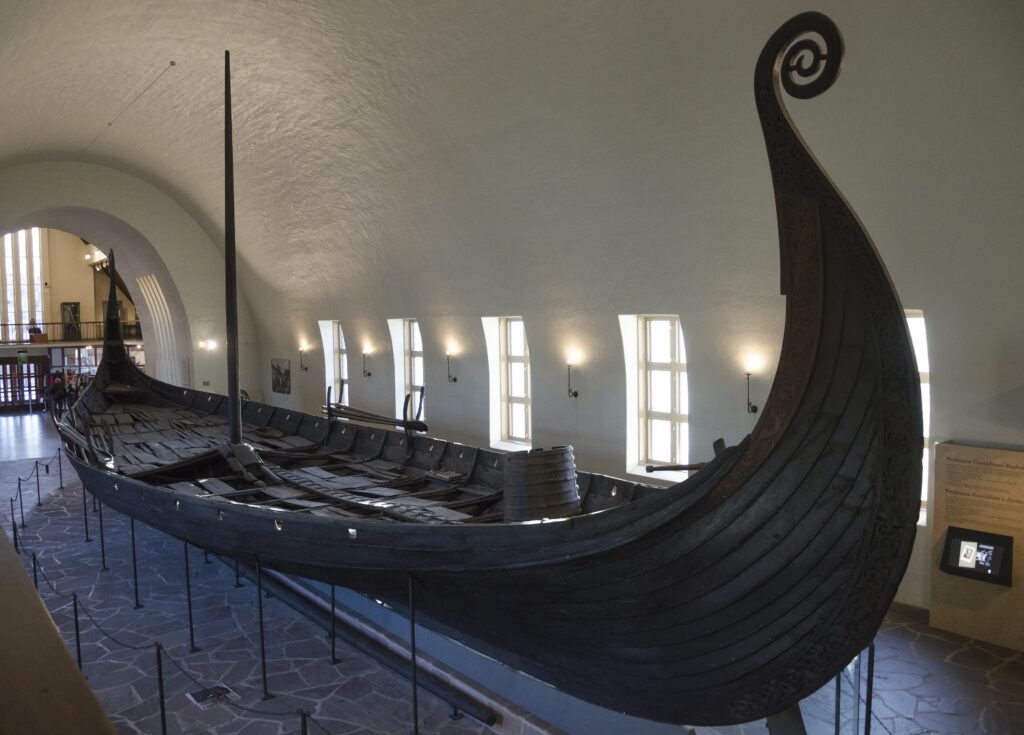
In the autumn of 834 AD, Vikings in Norway buried a magnificent oak ship under a huge mound of earth.
Burials like this were for the most powerful people in Viking society.
But when archaeologists opened it more than 1,000 years later, they found two women inside, and historians are still debating who they were.
A ship fit for royalty
The Oseberg Ship was found in 1903 inside a burial mound on a farm near Tønsberg, in southern Norway. Archaeologists Gabriel Gustafson and Haakon Shetelig excavated it in 1904.
The ship is about 71 feet long and built almost entirely of oak, with carved spirals and animals curling up its tall bow.
Tree-ring dating of the burial chamber’s timbers shows exactly when it went into the ground: autumn of 834.
The grave was packed with treasures for the afterlife: a carved wooden cart, four decorated sleighs, beds, chests, tools and fine textiles.
Horses, dogs and cattle were buried with it too. Robbers had broken in long ago and taken anything made of gold or silver, but they left the wood behind.
Two women, one mystery
The two women were laid on a bed inside a burial chamber on the ship’s deck.
One was around 80 and had severe arthritis.
Experts first thought the other was 25 to 30, but later tests on her teeth put her at about 50.
Their clothes hint at a difference in rank. The older woman wore a fine red wool dress with a delicate white linen veil. The younger one wore a plainer blue wool dress with a wool veil.
So who were they? One popular theory is that the older woman was Queen Åsa, a royal figure from Norse sagas, but many historians doubt it.
Others think she may have been a völva, a powerful Viking seeress. The second woman could have been a companion, a servant, or a relative. More than a century after the dig, no one knows for sure.
Built to last
The burial mound sealed the ship away for more than 1,000 years, and it came out of the ground in remarkable condition. About 90% of the ship you can see today is its original wood.
For nearly a century, it sat in the Viking Ship Museum in Oslo.
In September 2025, it made one last, very slow voyage: about 115 yards, at ten inches per minute, into the new Museum of the Viking Age, which is set to open in 2027.